group-2

Apply visa

Thailand Visa for Indians 2026: Visa Free Entry, Fees & Application Guide

Last Update: 233-03-2026

thailand

Thailand remains a top travel destination for Indian tourists, offering breathtaking landscapes, rich culture, and a welcoming atmosphere. The Thai government's recent announcement about the introduction of an e-Visa system, effective from January 1, 2025, marks a significant development for Indian travelers. This guide provides an in-depth look at the visa requirements for Indians, including the continuation of the 60-day visa exemption and the new e-Visa process.

In this blog


  1. Do Indians Need a Visa for Thailand?
  2. Is Thailand Visa Free for Indians?
  3. Types of Thailand Visas
  4. Thailand Visa Requirements for Indian Passport Holders
  5. How to Apply for a Thailand Visa Online?
  6. Jurisdiction of Royal Thai Embassies and Consulate-Generals in India
  7. Thailand Visa Fees
  8. How and Where to Pay the Visa Fees?
  9. Thailand Visa Processing Time
  10. Common Reasons for Thailand Visa Rejection
  11. FAQs

Do Indians Need a Visa for Thailand?

As of January 2025, Indian ordinary passport holders benefit from a 60-day visa exemption for tourism and short-term business engagements. This exemption is designed to facilitate easy travel for Indians visiting Thailand for leisure or quick business trips.


The Thailand visa exemption remains effective until further announcements from the embassy, ensuring that Indians can continue to enjoy short stays without the hassle of obtaining a visa. However, the Thai embassy has announced an e visa option for Indians which allows them to apply for a visa in advance and avoid long queues and waiting times at the entry port in Thailand.

Is Thailand Visa Free for Indians in 2026?

Yes, Thailand is visa free for Indians for stays up to 60 days. This exemption applies specifically to tourism, visiting family, and short-term business activities. It's an attractive option for Indians planning quick getaways or participating in business meetings and conferences in Thailand.

How can Indian travellers reach Thailand from India?

Thailand is well connected to major Indian cities, making travel simple for tourists planning short holidays or business visits. Thanks to Thailand visa free for Indians, many travelers can board direct flights without lengthy pre-travel paperwork. Airports across India operate regular routes to Bangkok and Phuket, allowing smooth access to Thailand’s most popular destinations. Below are the main travel options Indians commonly use when planning a trip.


  • Direct Flights: Cities like Delhi, Mumbai, Bengaluru, Kolkata, Chennai, Hyderabad, and Kochi offer direct routes to Bangkok (BKK, DMK) and Phuket (HKT).

  • Popular Airlines: Thai Airways, IndiGo, Air India, SpiceJet, and Thai AirAsia operate frequent services.

  • Travel Time: Flights typically take 3.5 to 4.5 hours depending on departure city.

  • Connecting Flights: Bangkok acts as a hub for reaching Chiang Mai, Krabi, and other regions.

  • Land Route Interest: The India-Myanmar-Thailand Trilateral Highway exists but remains limited for tourists.

What are the latest changes in Thailand’s visa rules for Indian travellers?

Thailand has introduced several updates to make travel easier and attract more international visitors. Indian travellers now benefit from simplified entry rules and new visa options designed for both tourists and long-stay visitors. These changes affect how Indians plan travel, particularly those staying longer or working remotely in Thailand. Understanding the latest policies helps travellers decide whether they need a Thailand Visa for Indians or can enter through visa exemption.

  • Permanent Visa-Free Entry: Thailand currently offers Thailand visa free for Indians for tourism and short visits.

  • Extended Stay Duration: Entry stamps now allow up to 60 days instead of the previous 30-day limit.

  • Destination Thailand Visa (DTV): A long-term option for digital nomads, remote workers, and cultural learners valid for five years.

  • Upcoming ETA Requirement: Authorities plan to introduce Electronic Travel Authorization (ETA) for visa-exempt travellers in the future.

  • Flexible Entry Options: Travelers may still choose Visa on Arrival Thailand for Indian visitors in specific circumstances.

Types of Thailand Visas

Thailand offers a diverse range of visa options catering to different purposes and passport types. Here’s a detailed breakdown of the various types of Thailand visas available to travelers:


  • Tourist Visa (TR): Suitable for tourism and leisure activities, participation in MICE industry events, recreational learning activities (such as diving, boxing, Thai massage, Thai culinary learning), family visits (less than 60 days), and football trials.

  • Medical Visa (MT): For individuals seeking medical treatment in Thailand for less than 60 days.

  • Transit Visa (TS): For travelers transiting through Thailand to their final destination.

  • Sports Visa (S): For individuals participating in sports activities or competitions.

  • Crew Visa (C): For persons in charge or crew members coming to a port, station, or area in Thailand.

  • Business/Employment (B): For conducting business, employment, internships, or attending extracurricular conferences.

  • Investment (IB): For investment activities under the Board of Investment (BOI) guidelines.

  • Education (ED): For study tours, technical visits, or participating in educational activities approved by related government agencies.

  • Family Visit/Others (O): For family visits, long-term medical treatments, volunteering, and other approved activities.

  • Official Duties (F): For individuals performing official duties or attending meetings/training at government or international organizations.

  • Research (RS): For conducting scientific research or teaching in an institute approved by the National Research Council of Thailand.

  • Religious Activities (R/R-A): For missionary work or other religious activities approved by Thai ministries.

  • Media (M): For journalists, reporters, or film production teams with prior registration required.

  • Long Stay (O-A): For applicants over 50 years who wish to stay without the intention of working.

  • Destination Thailand Visa (DTV): For digital nomads, remote workers, freelancers, and participants in various cultural, sports, or medical activities.

  • Long-Term Resident Visa (LTR): Offers a range of benefits to enhance Thailand’s attractiveness as a regional hub for high-potential individuals. Categories include Wealthy Global Citizens, Pensioners, Work-From-Thailand Professionals, and Healthy Skilled Professionals.

  • SMART Visa: Designed to attract skilled professionals, investors, executives, and startup entrepreneurs to work or invest in targeted industries in Thailand. Provides maximum 4-year permission to stay, exemption from the work permit requirement, and additional privileges.

Thailand Visa Requirements for Indian Passport Holders

When applying for a Thailand Tourist Visa, ensure you have all the necessary documents prepared. Here is a detailed checklist of the required documentation: 

  1. Passport or Travel Document: Must have at least 6 months validity and two blank pages.
  2. Visa Application Form: Fully completed and signed by the applicant.
  3. Color Photographs: Two recent color photographs (35mm x 45mm), not older than 3 months, taken against a white background (JPG / JPEG format, size not exceeding 3 MB)
  4. Evidence of Permanent Residence: For non-Indian passport holders, proof of permanent residence in India.
  5. Confirmed Flight Tickets: Tickets for both arrival and departure from Thailand.
  6. Accommodation Proof: Confirmation of hotel or accommodation reservation in Thailand under the applicant's name and other guests.
  7. Bank Statement: A bank statement from the last six months, stamped with the original bank seal, showing a minimum funds of USD 700 per person and USD 1,400 per family.
  8. Currency Exchange Receipts: Original currency exchange slips evidencing an exchange of at least USD 500 per person per week, clearly indicating the applicant's name.
  9. Cover letter: A cover letter from both the company and travel agency detailing the travel plan and stay, accompanied by the company's attested bank statement and business registration.

Note

The requirements listed above are specifically for a Thailand tourist visa. For other types of visas, the required documents may vary. You can always refer to the embassy portal for detailed information on other visa requirements.

Thailand Visa Documents Checklist for Indians

lthough Thailand visa free for Indians applies to many short visits, travellers applying for long-term visas or special categories must keep their paperwork ready.


Immigration officers may also request certain proofs even during visa-exempt entry. The checklist below covers the most common documents Indian travellers should prepare before travelling to Thailand.


  • Valid Passport: Must remain valid for at least six months and contain two blank pages.

  • Proof of Onward Travel: A confirmed return flight or ticket to another destination within the permitted stay period.

  • Accommodation Details: Hotel booking confirmations or an invitation letter if staying with relatives or friends.

  • Passport Photos: Recent 4×6 cm photographs with a white background for visa applications such as Bangkok Visa for Indians.

  • Financial Evidence: Recent bank statements or proof of sufficient funds, especially for long-term visa applications

How to Apply for a Thailand Visa Online?

Apply for a Thailand Visa with Teleport

  1. Visit Teleport Thailand visa portal and click on ‘Start Application’
  2. Quickly fill out your travel information and personal details on Teleport’s secure form.
  3. Complete the secure online payment for Teleport’s processing service.
  4. Our visa experts will review your application for accuracy and compliance. We’ll submit your application to the Thai Embassy on your behalf.
  5. After submission, you’ll receive a payment receipt from Teleport. Take the receipt to the consulate, present it, and pay the visa fees.
  6. Once processed, collect your visa and verify the details before your trip.

Applying with Teleport streamlines your visa application process, making it hassle-free and efficient.


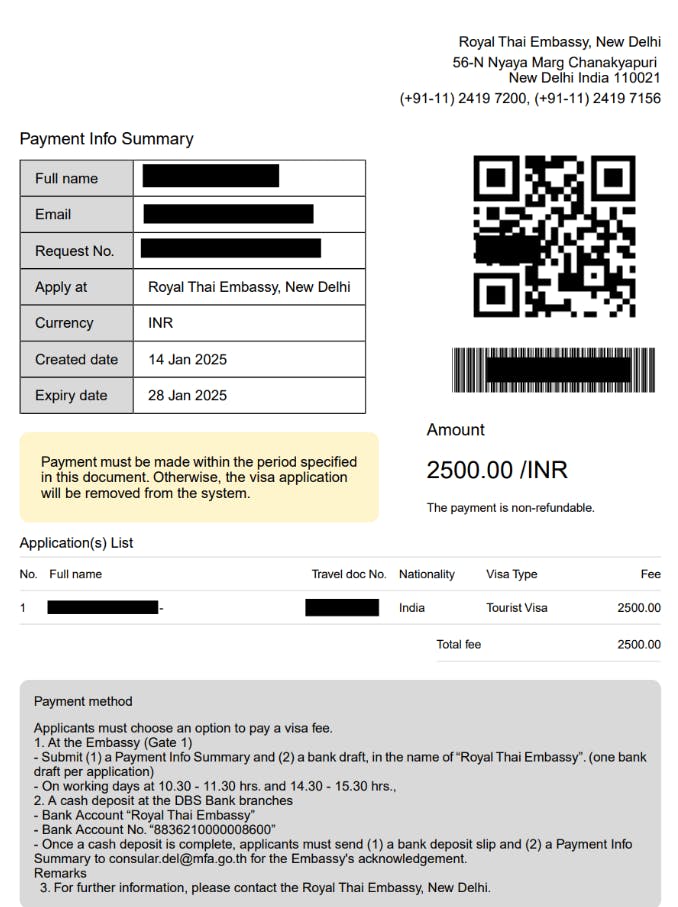
Sample image of payment receipt


thailand visa payment receipt sample

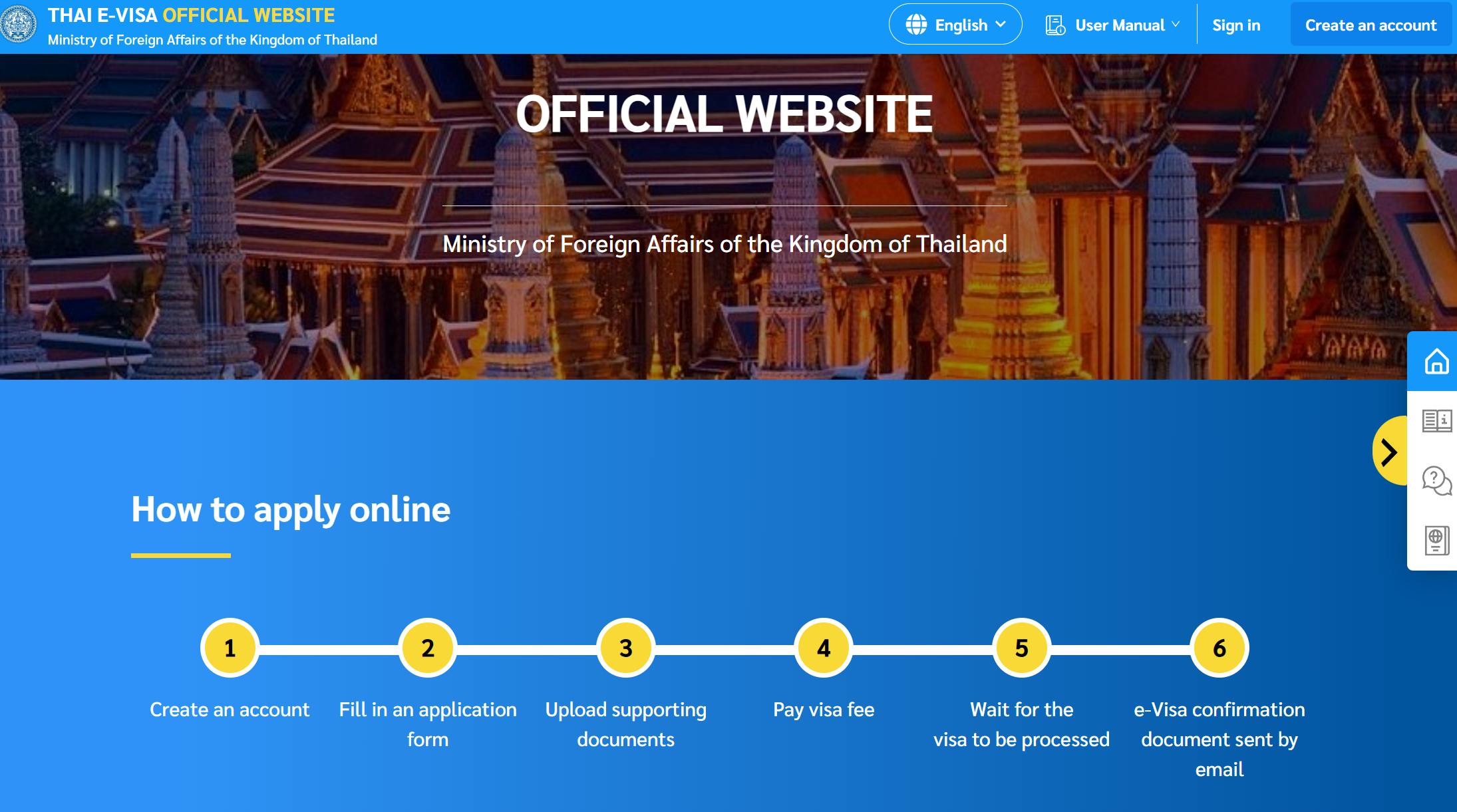
Apply for Thailand E Visa through Government Portal

Starting January 1, 2025, Indian travelers can apply for all types of Thai visas online through the e-Visa system. Here’s a detailed guide on how to apply for an e-Visa:


Step 1: Visit the e-Visa Portal


thailand e visa portal


Step 2: Create an Account

  • Account Setup: Register by creating an account on the portal. A verification link will be sent to your email to activate your account.
  • Multiple Applications: Once your account is set up, you can use it to apply for e-Visas for yourself and up to 10 family members.
  • Future Applications: The same account can be used for any future visa applications.

Step 3: Apply for a New Visa

  • Eligibility Check: Log into your account, check your eligibility, and select the appropriate visa category.
  • Document Upload: Upload the biodata page of your passport and a recent color photograph (taken within the last 6 months in JPG/JPEG format and not exceeding 3 MB in size).
  • Personal and Travel Information: Enter your personal details and travel itinerary.
  • Supporting Documents: Upload any required supporting documents.
  • Visa Fee Payment: Pay the visa fees according to the specific requirements of the mission where you are applying. Note that payment methods are offline and need to be made physically at the consulate.

Step 4: Check Application Status

  • Status Tracking: You can monitor the status of your application by logging into your account on the e-Visa portal.
  • Withdrawal Option: Applications can be withdrawn if necessary, but be aware that visa fees are non-refundable under all circumstances.

Step 5: Receive Your e-Visa

  • Visa Issuance: Once granted, the e-Visa will be automatically sent to the email address you used for the application.
  • Print the visa: You must print out the e-Visa document as digital copies presented on mobile phones or other electronic devices will not be accepted by airlines during check-in or by Thai immigration officials upon arrival.

Jurisdiction of Royal Thai Embassies and Consulate-Generals in India

When applying for a visa to Thailand, applicants must submit their applications to the Royal Thai Embassy or Consulate-General based on their current location in India. Here is a breakdown of the jurisdictions for each mission:


Royal Thai Embassy in New Delhi

  • States Covered: Arunachal Pradesh, Assam, Haryana, Himachal Pradesh, Manipur, Meghalaya, Mizoram, Nagaland, Punjab, Rajasthan, Sikkim, Tripura, Uttarakhand, Uttar Pradesh
  • Union Territories Covered: Chandigarh, Dadra and Nagar Haveli and Daman and Diu, Delhi, Jammu and Kashmir, Lakshadweep, Ladakh

Royal Thai Consulate-General in Kolkata

  • States Covered: Bihar, Chhattisgarh, Jharkhand, Odisha, West Bengal
  • Union Territory Covered: Andaman and Nicobar Islands

Royal Thai Consulate-General in Chennai

  • States Covered: Andhra Pradesh, Karnataka, Kerala, Tamil Nadu, Telangana
  • Union Territory Covered: Puducherry

Royal Thai Consulate-General in Mumbai

  • States Covered: Goa, Gujarat, Madhya Pradesh, Maharashtra

Applicants are advised to contact the respective Embassy or Consulate-General based on their location to ensure that their visa application is processed efficiently.

Thailand Visa Fees

Below are the visa charges for Thailand based on different visa types:

Visa TypeVisa Fee

Tourist Visa (Single Entry)

INR 2,500/-

Tourist Visa (Multiple Entry, 6 months)

INR 12,500/-

Transit Visa (Single Entry)

INR 2,000/-

Transit Visa (Double Entry)

INR 4,000/-

Non-immigrant Visa (Single Entry)

INR 5,000/-

Non-immigrant Visa (Multiple Entry, 1 year)

INR 12,500/-

Non-immigrant Visa (Multiple Entry, 3 years)

INR 25,000/-

Destination Thailand Visa (Multiple, 5 years)

INR 25,000/-

Long-Term Resident Visa (Multiple, 10 years)

INR 125,000/-

SMART Visa (1 year)

INR 25,000/-

SMART Visa (2 years)

INR 50,000/-

SMART Visa (3 years)

INR 75,000/-

SMART Visa (4 years)

INR 100,000/-

Note

It's important to note that visa fees are non-refundable under all circumstances, even if the visa application is denied.

How and Where to Pay the Visa Fees?

Thailand visa fees must be paid offline and can be paid through several offline methods as outlined on the e-Visa portal.


When applying for a visa at the Royal Thai Embassy in New Delhi, applicants have two offline payment options to choose from for their visa fees:


1. Payment at the Embassy (Gate 1)

  • Applicants need to submit a completed Payment Info Summary along with a bank demand draft made out to "Royal Thai Embassy New Delhi." Please note that one bank draft is required per application.
  • Payments can be made during working hours from 10:30 to 11:30 AM and 2:30 to 3:30 PM.

2. Cash Deposit at DBS Bank Branches

  • After making a cash deposit at any DBS Bank branch, applicants must send the bank deposit slip and the Payment Info Summary via email to consular.del@mfa.go.th. This step is necessary for the Embassy to acknowledge the receipt of payment.

Thailand Visa Processing Time

The processing time for Thailand's e-Visa is approximately 3 to 5 working days from the receipt of the visa fee. Applicants are advised to apply at least 15 days prior to their travel dates to ensure they receive their visa in time.

Common Reasons for Thailand Visa Rejection

Although many travellers benefit from Thailand visa free for Indians, those applying for long-stay visas or special categories must ensure their documents are accurate. Even minor mistakes can lead to application rejection and delays in travel plans. Understanding the most common issues helps applicants avoid unnecessary complications and complete the visa process smoothly.


  • Passport Validity Issues: Applications may be rejected if the passport has less than six months validity remaining.

  • Incomplete Documentation: Missing hotel reservations, return tickets, or required supporting documents can lead to refusal.

  • Insufficient Financial Proof: Authorities may reject applications if applicants fail to demonstrate adequate funds.

  • Previous Overstay Records: Past immigration violations in Thailand can affect visa approval.

  • Inconsistent Information: Differences between application forms and supporting documents can raise verification concerns and delay Thailand Visa Processing Time.

Summing it up

The introduction of the e-Visa system by Thailand for Indian passport holders simplifies the process of obtaining the necessary travel documentation. Coupled with the continued visa exemption for short stays, traveling to Thailand remains accessible and straightforward for Indian tourists and business travelers. Always ensure to check the most current regulations and visa requirements before planning your journey.

What important travel guidelines should Indians know before visiting Thailand?

Travelling to Thailand is generally smooth, especially with the ease of Thailand visa free for Indians, but understanding local customs and travel practices can make the experience far more comfortable. 


From cultural etiquette to payment methods, being aware of local norms helps travellers avoid misunderstandings and enjoy their trip responsibly. Here are some essential guidelines Indian visitors should keep in mind.


  • Respect Local Culture: Follow temple dress codes, respect the monarchy, and avoid touching someone’s head as it is culturally sensitive.


  • Currency Usage: Thai Baht (THB) is widely used, though QR payments like PromptPay are common in cities.

  • Mobile Connectivity: Local SIM cards from AIS, DTAC, or TrueMove provide reliable internet access.

  • Travel Insurance: Medical coverage is highly recommended, especially for adventure activities or scooter rentals.

  • Local Transport Apps: Ride-hailing platforms like Grab and Bolt are convenient alternatives to negotiating tuk-tuk fares.

FAQs

Do I need a visa for a short visit to Thailand as an Indian citizen?

Yes, Indian citizens can travel visa-free to Thailand for tourism or short-term business for up to 60 days. Beyond that, a visa is required. Also, Indians can apply for an e visa before travelling to avoid long queues at the arrival port.

How can I apply for a Thailand e-Visa from India?

You can apply for an e-Visa by creating an account at the Thai e-Visa portal, submitting your personal and travel details, uploading required documents, and paying the visa fee offline as instructed.

What are the photo specifications for the Thailand e-Visa application?

The Thailand visa photo size must be 3.4cm x 4.5cm. The photo should be a recent color photograph, taken within the last six months, in JPG/JPEG format, and must not exceed 3 MB in size.

Can I use my e-Visa account to apply for visas for my family members?

Yes, you can apply for up to 10 e-Visas at a time for yourself and your family members using the same e-Visa account.

What is the validity period for a tourist visa to Thailand?

A single-entry tourist visa is valid for three months with a permissible stay of up to 60 days per entry. A multiple-entry tourist visa allows a stay of 60 days per entry and is valid for six months.

How do I pay the visa fee for my Thailand visa application?

Visa fees must be paid offline at the Thai Embassy or consulate in India.

What should I do if my Thailand visa application is rejected?

While the visa fees are non-refundable, you can reapply by ensuring that all provided information and documents meet the embassy's requirements. Always check for any missing or incorrect information before submitting your application.

Is Thailand visa-free for Indians in 2026?

Yes. Thailand continues to offer visa-free entry for Indian citizens in 2026 for tourism and short business visits. Travelers can enter without a pre-approved visa and receive an entry stamp upon arrival.

How long can Indian travellers stay in Thailand under the new 60-day visa-free rule?

Indian travelers entering Thailand under the visa-exemption policy can stay for up to 60 days per visit. Immigration officers usually provide the entry stamp at the airport or border checkpoint.

Discount Icon

Get flat 10% OFF

On your first visa. Use code "TEL10". T&C apply

Apply