
1. Do Indians need a visa to travel to Canada?
Yes, Indian citizens must apply for a Canada tourist visa before travelling for tourism, family visits, business, or transit purposes.

Apply visa
Last Update: 07/03/2026

Canada sits high on many travel wish lists. The lakes, the calm cities, the familiar Indian communities, and often, family waiting on the other side. Before any of that becomes real, understanding the requirements for Canada tourist visa becomes the first step.
One important update in 2026 brings relief to many applicants. Canada recognises dual intent. This means you can apply for a tourist visa even if you already have a PR application in progress. Immigration officers understand that permanent plans and temporary visits can exist together. What matters is your proof that you will return to India after your visit.
Another major shift involves the application platform. The older GCKey system is gradually being replaced by the IRCC Portal. This newer system feels simpler and faster. Many applicants still land on the wrong page out of habit, which creates delays. Always begin from the official IRCC Portal when preparing your canada visit visa requirements.
A Canada tourist visa allows you to travel to Canada for short stays such as holidays, family visits, or tourism. This Temporary Resident Visa (TRV) appears as a sticker in your passport, but your actual permission to stay comes from the border officer. Most visitors receive permission to stay for up to six months. This period is not printed on your visa. It is decided when you enter Canada.
Travellers from non visa exempt countries must apply for a Canada tourist visa before entering the country. This includes citizens of India, China, and many other nations who need a Temporary Resident Visa for tourism, family visits, transit, or short business travel.
This visa is required in the following situations:
Travellers from visa exempt countries such as the United Kingdom, France, or Australia can apply for an Electronic Travel Authorization instead. US citizens and permanent residents are exempt from both. Basic travel to Canada visa requirements include a valid passport, proof of funds, intent to return home, and biometrics submission.
Different Canada tourist visa types come with different purposes, stay flexibility, and eligibility conditions. Knowing which one applies helps you plan your application correctly and avoid confusion later.
Most applicants today receive multiple entry visas. This allows travel to Canada several times during the visa validity period.
Important points include
Multiple entry visas make travel easier for frequent visitors.
Parents and grandparents visiting family for longer periods should consider the Super Visa. Tourist visa allows shorter visits. Super Visa allows longer stays and focuses on family reunions.
Choosing the right category ensures smoother approval.
Canadian immigration officers focus heavily on your ties to India. This comes from Section 179 b of immigration rules. Your responsibility is to prove that you will return home after visiting Canada.
Three major tie categories matter.
| Type of Tie | Example |
Economic ties | Stable job, senior role, business ownership |
Family ties | Spouse, children, dependent parents |
Property ties | Home ownership, investments |
Your application stands on your documents. Every file supports your credibility.
These form the foundation of your application.
Scanning only the first page of your passport is not enough. Every travel record matters.
These are essential documents required for Canada tourist visa.
These strengthen your application further.
Example itinerary format
| Day | Plan |
Day 1 | Arrive in Toronto and hotel check in |
Day 2 | Visit CN Tower |
Day 3 | Explore Niagara Falls |
Detailed plans show preparation and genuine travel intent.
Financial strength forms a critical part of canada visit visa requirements, and Immigration, Refugees and Citizenship Canada IRCC carefully examines not just how much money you show, but how it was accumulated.
Key expectations include:
Strong financial transparency strengthens your documents required for Canada tourist visa and builds confidence in your application.
Canada tourist visa fees form an essential part of your application planning, and understanding the full cost helps you avoid last minute surprises.
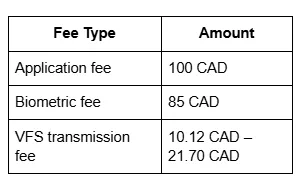
The application fee is paid directly to Immigration, Refugees and Citizenship Canada IRCC for processing your visitor visa. The biometric fee covers fingerprint and photo collection, which confirms your identity in the system. The VFS transmission fee is charged by VFS Global for securely handling and returning your passport after a decision is made.
These canada tourist visa fees apply to most Indian applicants and remain mandatory for completing the process successfully.
Processing time varies based on volume and system allocation.
Canada uses Chinook technology to process applications. This system reviews applications in batches.
Typical timelines include:
Season plays a role too. Summer months bring heavy student applications. Applying early improves your chances of smooth travel planning.
The application process for Canada begins on the official Immigration, Refugees and Citizenship Canada IRCC Portal. Each stage builds on the previous one, and careful completion helps avoid delays or technical rejection.
The process starts with the Come to Canada questionnaire available on the IRCC Portal. This tool asks about your travel purpose, nationality, and background. Your answers generate a personalised document checklist and confirm your eligibility under current canada visit visa requirements.
Document preparation requires both completeness and correct file format. The IRCC Portal allows only one PDF file per upload section. Multiple documents such as your cover letter, invitation letter, and identity proof must be merged into a single file under 4 MB.
The application form becomes available after your checklist is generated. Personal details, travel history, and financial information must match your supporting documents. Consistency across all sections strengthens your overall canada tourist visa requirements profile and prevents unnecessary verification delays.
Payment of canada tourist visa fees activates your application review. Fees include the visitor visa application fee and biometric fee. After payment confirmation, your application moves forward to the biometric stage.
A Biometric Instruction Letter is usually issued within 24 to 48 hours after fee payment. This letter is required before booking your biometric appointment at VFS Global. Fingerprints and photograph submission complete your identity verification and allow IRCC to begin final processing of your application.
A refusal letter can feel deeply disappointing, especially when travel plans, family visits, or long awaited holidays were already taking shape in your mind. The reasons often look brief on paper, but each one connects to how Immigration, Refugees and Citizenship Canada IRCC understood your situation.
Unclear bank activity becomes one of the most common concerns. Large recent deposits without explanation can make your profile appear uncertain. Officers need to feel confident that your travel funds are genuinely yours and stable.
Travel plans that do not align with your professional reality create hesitation. A long stay plan while your job allows only limited leave can raise questions about whether the visit will remain temporary.
A passport without previous international travel leaves officers with less context about your travel behaviour. Previous trips and timely returns help build comfort and trust in your intentions.
Many applicants receive approval after improving weak areas. Stronger documentation, clearer financial records, and honest storytelling often make the difference the next time.
A stronger application often comes down to how clearly your story is understood. Visa officers do not meet you in person, so your documents and explanations become your voice.
A cover letter gives you space to speak directly. Share why Canada matters to you, what you plan to do during your visit, and what brings you back home to India after the trip. Mention your work, your family, and your routine life. When your plans feel real and grounded, officers find it easier to trust your purpose.
An invitation from family feels reassuring, but supporting proof makes it complete. Along with their PR card or citizenship proof, their Notice of Assessment shows that they are financially stable and genuinely able to host you. This removes uncertainty and strengthens your overall canada visit visa requirements profile.
Past refusals from Canada, the United States, the United Kingdom, or other countries may feel uncomfortable to mention, but honesty matters more than perfection. Canada already has access to shared immigration records. Open disclosure shows integrity and gives your current application a fair and respectful foundation.
Many applicants succeed after improving these areas. Careful effort, honest communication, and complete documents required for Canada tourist visa can slowly turn hope into approval.
Yes, Indian citizens must apply for a Canada tourist visa before travelling for tourism, family visits, business, or transit purposes.
Passport, bank statements, photographs, travel itinerary, Income Tax Returns, and employment proof are essential documents required for Canada tourist visa application.
No fixed amount exists, but sufficient funds to cover travel, stay, and return with clear financial history are expected.
Canada tourist visa fees include 100 CAD application fee and 85 CAD biometric fee, excluding VFS passport transmission charges.
Processing usually takes between 10 and 60 days, depending on application volume, verification needs, and seasonal demand periods.
Yes, visitor status extension is possible by applying to Immigration, Refugees and Citizenship Canada before your authorised stay expires.
Most visitors can stay up to six months per visit, depending on border officer approval and travel purpose.
Yes, most applicants receive multiple entry visas valid until passport expiry, allowing repeated visits without reapplying.
Yes, travel is allowed with old passport visa and new passport, carried together during immigration and travel checks.
Yes, biometrics remain valid for ten years, and may not be required again during that validity period for applications.

Get flat 10% OFF
On your first visa. Use code "TEL10". T&C apply